HRDI provides access to collections that have been contributed by a number of archival partners. Click on the name of a partner below to learn more about their work and access their collections.
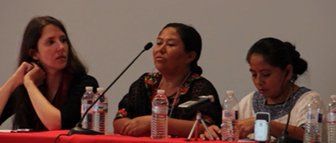
The Center for Women’s & Gender Studies, established in 1979 at the University of Texas at Austin, fosters academic research, teaching, advocacy, and community partnerships in support of ending gender discrimination. Their mission is to create communities that address the challenges faced in the areas of gender, sexuality, diversity, and equity. As part of its Embrey Women’s Human Rights Initiative, a five year grant project that “generated and supported projects to create an educational culture for gender and racial justice,” the Center for Women’s & Gender Studies organized Rethinking Power & Resistance: Gender & Human Rights from Texas to the Transnational Americas, a two-day international conference held at the Mexican American Cultural Center in Austin, Texas, on October 5-6, 2012.
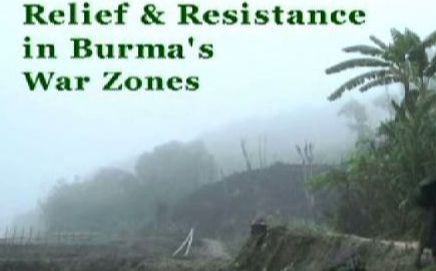
The Free Burma Rangers (FBR) is a multi-ethnic and multi-faith humanitarian service movement working to bring help, hope and love to people in the conflict areas of Burma, Iraq, Syria, and Sudan. Working alongside indigenous pro-democracy groups, FBR trains, supplies and coordinates Ranger teams to help provide emergency medical care, shelter, food, clothing and human rights documentation. The Free Burma Rangers formed in Burma in 1997 and they are composed of people from different ethnic groups providing direct relief to communities most affected by the results of oppression. These teams are trained to provide medical care and counseling, while documenting and reporting human rights violations. Since its formation, more than 1000 missions have been conducted to assist over 1,500,000 people. Together with other organizations, more than 100 Free Burma Ranger relief teams bring help to people facing oppression.
In addition to materials contributed by partners, the HRDI also preserves and provides access to archival collections donated directly to the project. These include audiovisual as well as paper materials. Some of these collections have been digitized, while others are available for consultation on site only. To schedule a visit to consult a collection on-site, please contact us.
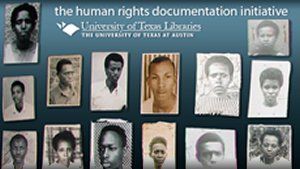
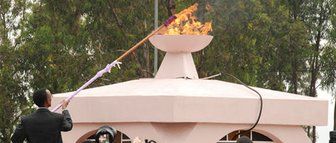
The Kigali Genocide Memorial in Kigali, Rwanda is the final resting place for more than 250,000 victims of the Genocide against the Tutsi in 1994. It is the home of the Genocide Archive of Rwanda, a collaborative project between the Kigali Genocide Memorial, the University of Texas Libraries, the National Commission for the Fight Against Genocide, Aegis Trust, Ibuka, Iwacu, and other information repositories from Rwanda.
The Museo de la Palabra y la Imagen (MUPI) is a civilian initiative founded in 1996 and dedicated to the research, recovery, preservation, and dissemination of the historical and cultural heritage of El Salvador. Its educational program promotes activities related to historical memory, human rights, and the culture of peace, creating spaces for reflection on the problems facing Salvadoran society. The HRDI partnered with MUPI beginning in 2009 to provide access to two audiovisual collections, the Radio Venceremos collection and Tejiendo la Memoria.
The Bernard and Audre Rapoport Center for Human Rights and Justice was created in 2004, thanks to a generous gift by the Bernard and Audre Rapoport Foundation. The Rapoport Center is committed to interdisciplinarity. Lawyers and law students work side by side with scholars and practitioners across disciplines that include anthropology, sociology, government, literature, fine arts, and public policy. The Center’s motto is “Partners for Change at the Intersection of Academics and Advocacy,” representing its unique position as an academic center that not only works across disciplines, but also collaborates with communities outside the academy with the aim of producing innovative and enduring change in the lives of marginalized individuals and groups.
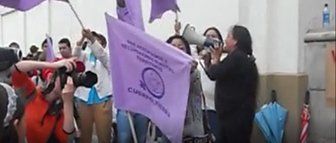
Voces de Mujeres (Women's Voices) formed in 1993 as an alternative, feminist media initiative with the goals of serving as a space of expression for all Guatemalan women; discussing issues that affect women; defending their rights as women; identifying dreams and expectations; recognizing the contributions of women, past and present; and connecting with social movements, particularly those related to women. The program was carried out with the voluntary contribution of more than forty women of various generations, disciplines and professions.
WITNESS is an international nonprofit organization that uses the power of video and storytelling to open the eyes of the world to human rights abuses. It was founded in 1992 by musician and human rights advocate Peter Gabriel, Human Rights First, and the Reebok Human Rights Foundation. The WITNESS Media Archive was launched in 2004 to manage the collection of video created within their campaigns and partnerships. Today the archive is the repository for over 5000 hours of video, both original raw footage and edited productions used in advocacy campaigns, from over 80 countries and 100 grassroots human rights partners, and covering a broad range of issues.